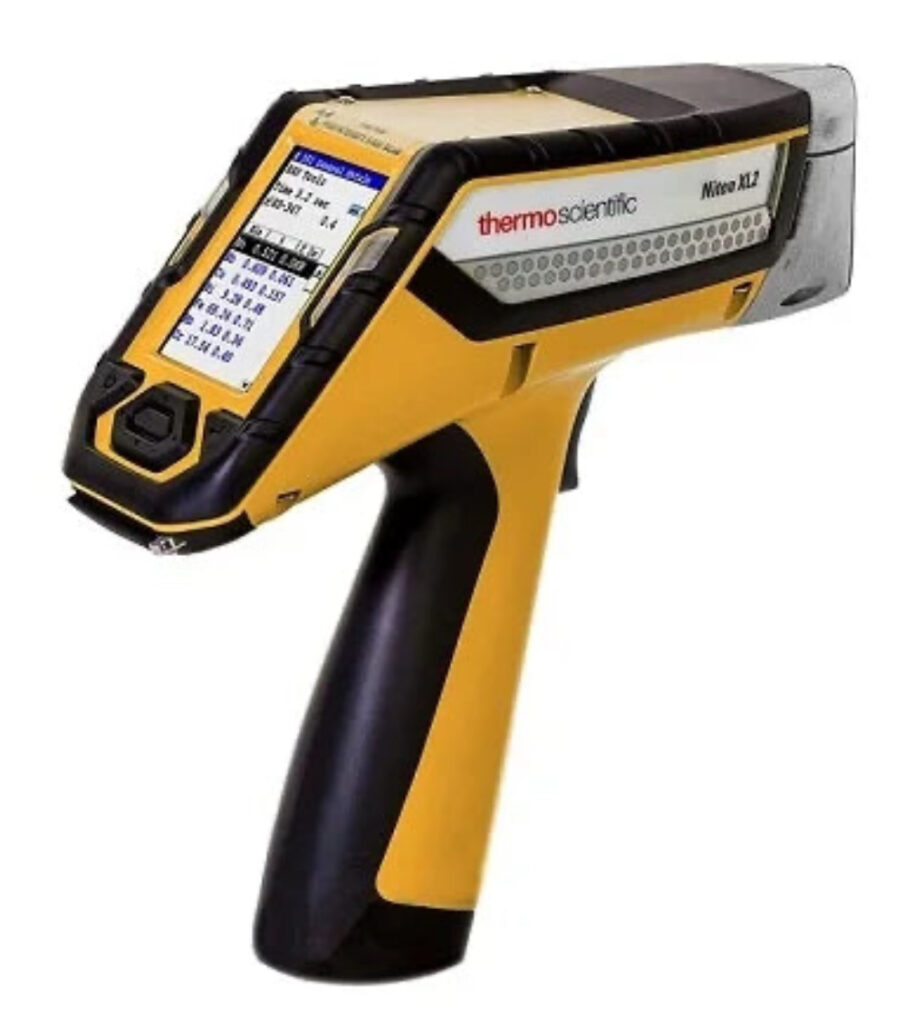
Optical Emission Spectroscopy (OES) is a method used to determine the chemical composition of almost any metallic material.
Materials such as carbon steels, cast irons, stainless steels, duplex and super duplex stainless steels, nickel, titanium and aluminum alloys, copper alloys and many more.
This type of chemical analysis test involves exposing the sample to an electrical spark generated between an electrode and metal samples and measuring the different wavelengths of light that are emitted. The data received then allows us to give a percentage breakdown of elements that are present within the sample.
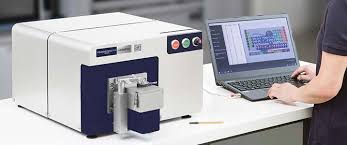
X-Ray Fluorescence (XRF) Analysis
Positive Material Identification (PMI) testing Using X-Ray Fluorescence (XRF) is a powerful analytical technique used to identify and quantify the elemental composition of a material. It’s a non-destructive method, meaning the sample doesn’t require any preparation or modification for analysis. This makes XRF ideal for a wide range of applications in various fields.
Advantages of XRF Analysis
- Non-destructive: Samples require no modification, preserving their integrity.
- Rapid analysis: XRF analysis can provide results in seconds or minutes.
- Multi-elemental analysis: A single XRF analysis can identify and quantify a wide range of elements.
- Wide range of applications: XRF is versatile and can be used in various fields.